
In the advertising industry, the term "media commission" often sparks debate. It refers to a percentage of a client’s total media budget paid to an agency for securing advertising space. And while the debate often centers around how high or low a client’s percentage is, the more important topic is services. Specifically, what services are covered by the media commission?
Historically, the standard media commission is 15% of the gross media budget. But, shifts in the advertising landscape, particularly the rise of digital media and increasing demands on advertisers to stretch their budgets, have reshaped this model.
Media commissions have become a strong negotiating tool. In extreme cases, ad agencies even adopted a “race-to-the-bottom” mentality, offering aggressively low media commissions to secure client contracts. And while a 3% commission may seem like a win, it should also spark more questions, starting with “what services are covered by the commission” and, more importantly, “what services are not?”
Factors Influencing Pricing
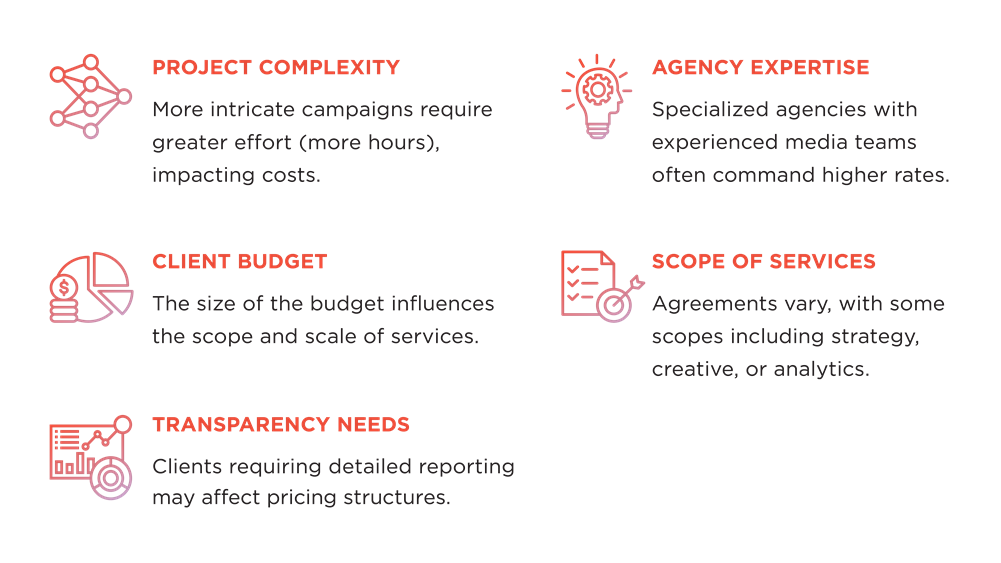
Modern Compensation Models
While the 15% commission was once standard, today's models are more diverse.
Reduced Commissions: Some agencies charge lower rates, depending on the media type.
Hybrid Models: Using a combination of compensation models. For example, agencies use a media commission to cover negotiating, buying, and optimization, and an hourly rate for strategy, planning, and reporting services.
Net vs. Gross Billing: Some agencies bill clients the net media cost and add a transparent markup or fee.
Digital Media: Digital advertising often deviates from the traditional 15% model. Common approaches include:
- Flat fees per campaign.
- Media commissions ranging from 5% to 20%.
- Performance-based compensation tied to metrics like clicks, conversions, or return on ad spend (ROAS).
The Hidden Costs of Low Commissions
A lower commission rate may seem appealing, but it can come with trade-offs.
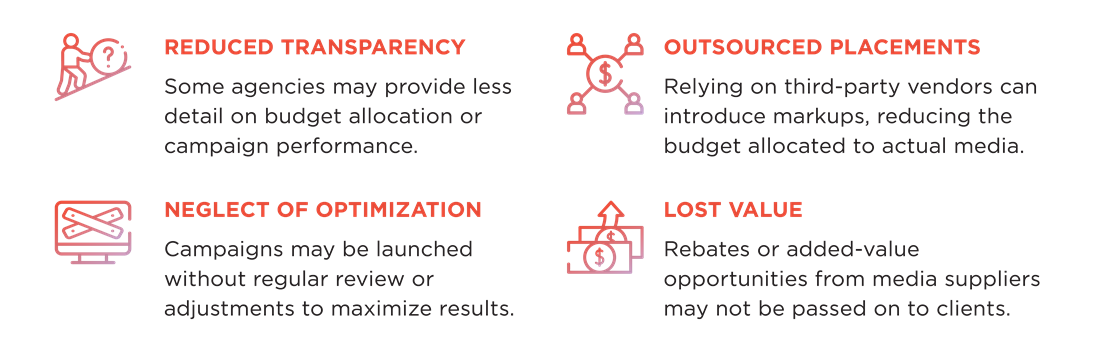
When selecting a media agency, the lowest commission isn’t always the best deal. The key is ensuring transparency, accountability, and alignment with your business goals. Ask critical questions to understand how your budget will be allocated, managed, and evaluated.
A slightly higher commission can deliver a stronger ROI if it comes with proactive management, detailed reporting, and a commitment to continuous optimization versus a low-cost option that cuts corners.
Putting It Into Practice: How Williams Randall Delivers Value Beyond the Commission
If there’s one takeaway from this, it’s that a low media commission doesn’t always mean you’re paying less. In fact, it can often signal a lack of strategic oversight, transparency, or optimization, all of which directly impact your results.
At Williams Randall Advertising, our media buying approach is designed to ensure your budget works smarter, not just harder. We focus on delivering real value through clarity, accountability, and results-driven execution.
Our Approach to Smarter Media Buys
Full Transparency
You’ll receive complete visibility into how your budget is allocated and how your campaigns are performing — with optional 24/7 dashboard access for real-time insights.
Continual Optimization
We don’t “set and forget.” Our team reviews your campaigns weekly and makes adjustments in real time to maximize outcomes and efficiency.
In-House Media Placements
A majority of our media placements are handled in-house, giving us greater control, speed, and accountability.
Passed-Through Added Value
Any bonus placements, negotiated value-adds, or media supplier incentives we secure are passed directly to you.
More Than a Percentage, It’s About Partnership
In media buying, what you pay for matters more than what you pay. At Williams Randall, we believe your media commission should buy you more: deeper insight, smarter decisions, and stronger results.


