
Meta just changed how long it remembers seeing your ads—and it’s about to show up in your performance reports. Starting in 2026, Meta’s longer attribution windows for its core ad platforms (Facebook, Instagram, Messenger, WhatsApp) has gone away, which means conversions that actually happened may no longer get counted. Before assuming performance has dropped, it’s worth understanding what’s actually changing, why it matters, and how to stay ahead of it.
WHAT IS CHANGING?
On January 12, 2026, Meta deprecated certain attribution windows available through its API, limiting the timeframe advertisers can look back to determine whether a conversion can be credited to an ad view or click. Post-view conversion metrics—when someone sees an ad but does not click before converting—will now be limited to just a one-day view. This will significantly hinder our ability to measure an ad's impact on a customer journey that lasts more than one day—and based on historical reporting, about 30-40% do!
Thankfully, we will continue to be able to report on conversions that occur up to 28 days after clicking an ad.
CONVERSION ATTRIBUTION WINDOWS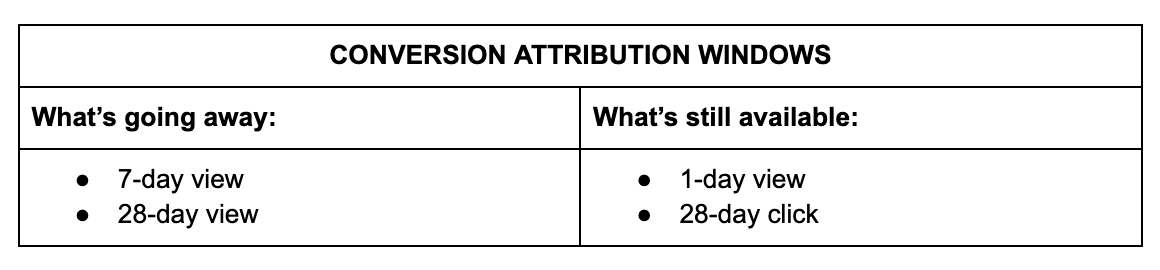
What’s going away:
- 7-day view
- 28-day view
What’s still available:
- 1-day view
- 28-day click
WHAT DOES THIS MEAN?
In short, Meta will now stop “remembering” ad views after one day. Conversions that happen later may still occur, but they won’t be reflected in reporting. This means we’ll see fewer reported conversions—not because ads suddenly stopped working, but because the window for credit just got smaller.
HOW WILL THIS IMPACT META DELIVERY?
Meta remains a strong driver of conversions, especially as Google paid search faces new challenges from AI Overviews, rising costs, and general market inflation—so yes, we’re paying attention.
The good news: this change does not impact how Meta ads are delivered or optimized. Campaigns have already been optimized to the 28-day click / 1-day view window for years. What’s changing is reporting visibility, not performance.
LOOKING AHEAD
We should expect reported conversion numbers to dip simply because Meta is counting fewer things—not because fewer things are happening. To soften the impact, here’s how we move forward:
Implement Conversions API (CAPI)
- Enables server-side conversion tracking
- Uses first-party, server-side data for more reliable measurement
- Less affected by ad blockers and browser restrictions
- Improves attribution and optimization by reducing data loss from browsers and privacy controls
Lean Into First-Party Data
- Improve Event Match Quality (EMQ) by passing first-party data such as emails, phone numbers, or user IDs via CAPI
- Better matching = better measurement
Adjust Reporting & Strategy
- Download and save historical data before it disappears into the void
- Update automated rules that rely on deprecated view windows
- Standardize on the 28-day click / 1-day view window
- Be cautious with YoY comparisons—numbers may look different even if performance isn’t
Keep View-Through Conversions in Perspective
- Conversions still happen after the 1-day view window—we just won’t see them anymore
Invest in Creative
- Strong, varied creative (especially video) matters more as Meta’s automation increases
NEXT STEPS
If any of this has sparked questions—or if you’d like help deciding which measurement alternatives are right for your campaigns—the team at Williams Randall is ready to talk it through. We can help you sort out what’s changing, what actually matters, and which options make the most sense for your goals. Reach out to your Williams Randall account executive or via the form in the footer, and we’ll take it from there.


